
ADAS Recalibration
ADAS is quickly becoming a standard feature for most vehicles. As technology advances, car owners gain access to better ways to help protect themselves and others while they are on the road. Although this technology is available, in certain situations, it still needs to be maintained or recalibrated.
What Does ADAS Mean?
ADAS stands for Advanced Driver Assistance Systems. These systems are any automated part of the vehicle that assists the driver in the driving process. When used in addition to safe human practices, ADAS can significantly increase car and road safety.
ADAS systems available in vehicles today include, but are not limited to:

Adaptive
Cruise Control
Forward Collision Mitigation
Adaptive
Headlights
Lane Departure Warning
Blind Spot
Monitoring
Lane
Keep Assist
Forward
Collision Alert
Park
Assist
The vehicle will use cameras, radars, lasers, and other devices to gather information to complete these functions. That information is then processed by the vehicle’s computer to deliver the information to the driver. These devices create what is known as a circle of safety around the vehicle that can help detect and react to potential dangers.
What is ADAS Recalibration?
Recalibration is the process of returning a vehicle’s ADAS to its original equipment manufacturer specifications. Going back to these specifications essentially resets the equipment to the optimal settings for their performance. Recalibrating will help ensure that the cameras or sensors on your vehicle are sending accurate readings to the internal computer.
How are recalibrations completed?
At Auto Glass Excellence, our professionals are trained and certified to use the Autel System for recalibrating an ADAS. This system allows our technicians to run intuitive and precise diagnostics on vehicles in order to make adjustments down to the most accurate millimeter.

Dynamic v. Static Recalibration
Two methods can be used when recalibrating the ADAS of a vehicle: Dynamic and Static Calibration.
Dynamic Recalibration
Dynamic recalibration is done through the on-board computer while the vehicle is moving. This type of calibration is typically for vehicles that require electric calibration. Once calibration is complete, the ADAS will be returned to its original manufacturer standards and be able to accurately read lines and lane dividers
Static Recalibration
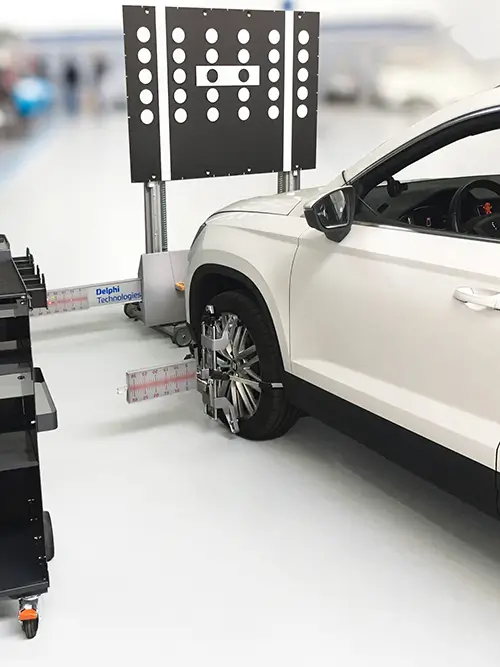
Static recalibration requires the vehicle to be set-up and recalibrated in a shop. Once the vehicle is in place, the camera will be calibrated using targets set-up at different heights and distances. During the process, the vehicle remains in place, in a static position. Once the cameras and sensors have been calibrated, the technicians will typically conduct a road test to ensure that the ADAS works properly.